Blog
-
How to Scrape Data from Websites Using Node-RED
Web scraping has become an indispensable tool for monitoring news, tracking competitors, and gathering insights. In this guide, you'll learn how to harness the power of Node-RED for efficient web scraping, allowing you to extract and manage data from various websites with ease that are not exposed through an API.
read more... -
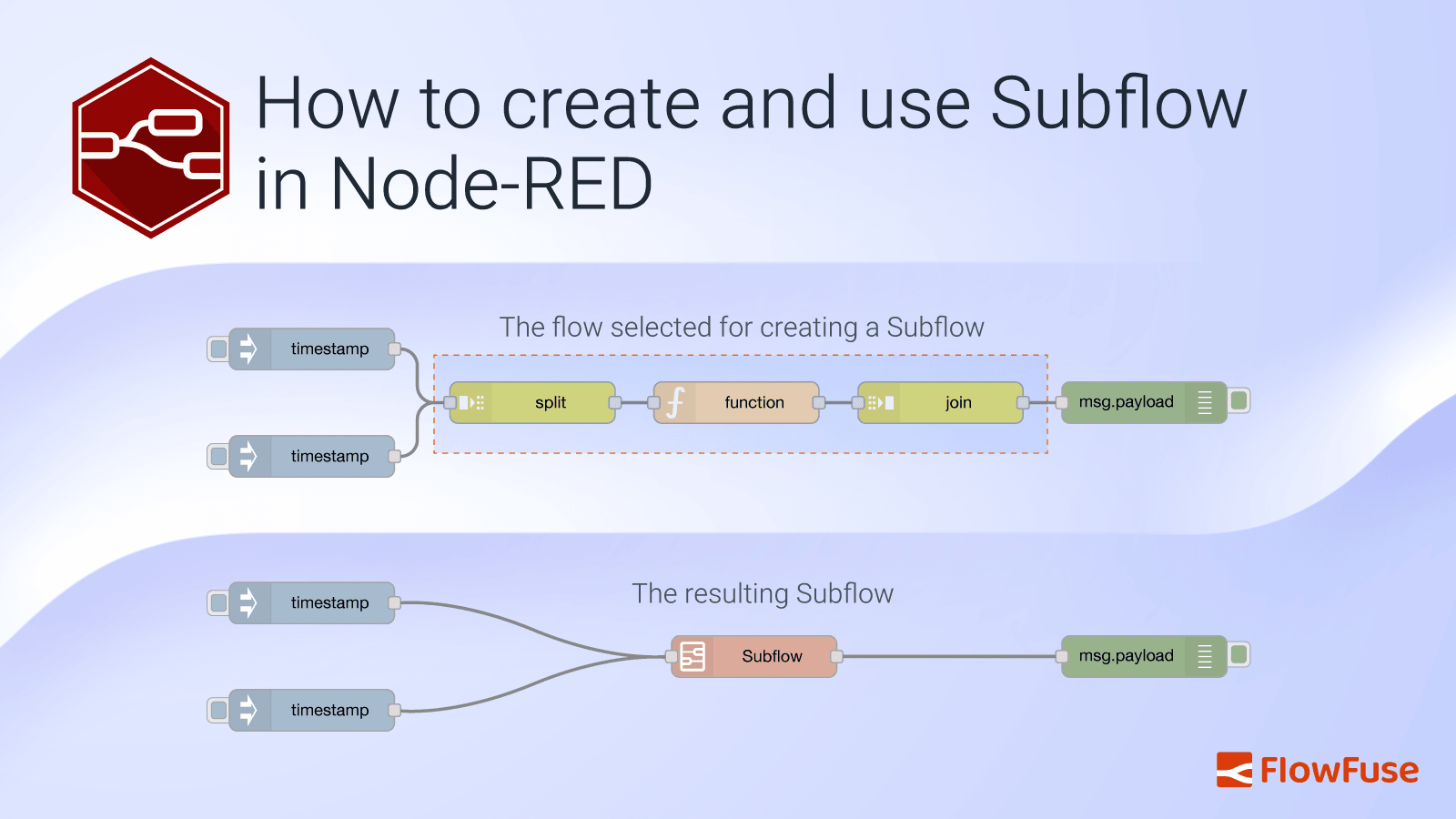
How to create and use Subflow in Node-RED
In traditional programming, managing complex and repetitive tasks can quickly lead to a tangled mess of code that’s hard to maintain and update. To tackle this issue, developers use libraries or modules—reusable chunks of code that help organize functionality, minimize duplication, and keep codebases clean and manageable.
-

MQTT Sparkplug B Implementation: Protocol, Architecture & Best Practices
Connected devices can generate a lot of data, but without a standardized format, managing and consuming it can be tricky. MQTT certainly simplifies getting your messages delivered but it does not enforce any structure. This is where MQTT Sparkplug B helps by providing a clear, standardized format for data. In this guide, we’ll show you how to use MQTT Sparkplug B with Node-RED to make managing your device data easier and more organized.
-
Monitoring and Optimizing Node-RED Flows with Open Telemetry.
Have you ever found yourself frustrated by unexpected delays in your Node-RED flows, wondering where the bottlenecks are hiding? Even small latency issues can have a big impact on your system's performance. That's where Open Telemetry comes in. With its powerful distributed tracing capabilities, you can finally take control and get a clear view of how your flows are performing in real time.
-
Bridging OPC UA Data to MQTT with Node-RED
Have you ever found yourself trying to connect old industrial systems with new IoT tools? This is a common scenario when trying to digitally transform while setting up your Unified Name Space. Maybe you have machinery that uses OPC UA, but your data is sent through MQTT. How do you make these systems work together smoothly?
-
FlowFuse Dashboard vs UI-Builder: A Comprehensive Comparison
When choosing a dashboard solution for Node-RED, two popular options are FlowFuse Dashboard (also known as Dashboard 2.0) and UI-Builder. This article compares these tools across several key areas, including installation, ease of use, development activity, and customizability, to help you decide which one best suits your needs.
-

How to Set Up SSO SAML for Node-RED
SSO plays a crucial role in modern enterprise environments by simplifying user authentication across multiple applications. At FlowFuse, we recognize the significance of SSO and offer robust support for integrating it with your self-hosted platform. In this comprehensive guide, we will focus on configuring SSO SAML, specifically using Google as the Identity Provider (IdP). We also support SSO with LDAP. For more information, refer to Setting up LDAP SSO for your Self-Hosted FlowFuse.
-
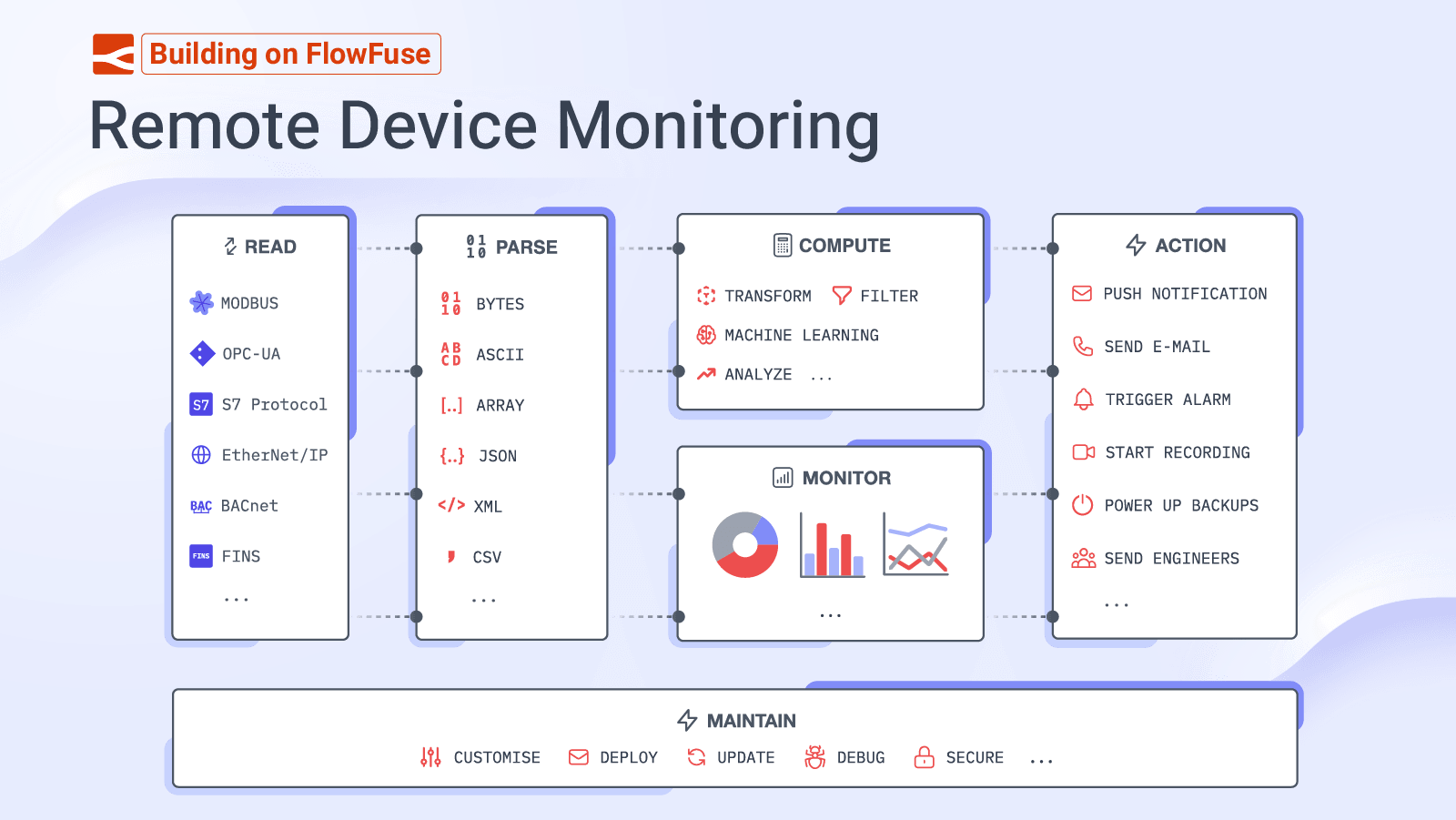
Building on FlowFuse: Remote Device Monitoring
{% from "stories/customer-story.njk" import storyTile %}
FlowFuse has established a rich ecosystem of products to help you build bespoke, powerful, low-code applications.
We've seen customers utilizing these to revolutionise precision manufacturing, automate building management and modernize the distribution of global weather data, just to name a few examples.
In this series of articles, we'll be taking a look at the common architectures and design patterns we are seeing used across our customer base, and how you can use these to build your own applications. To kick things off, this article will focus on "Remote Device Monitoring".
-
Calling a Python script from Node-RED
Python's robust data processing capabilities and extensive libraries are well-known in programming. When combined with Node-RED, these technologies can synergize to elevate data analytics and automation. This guide walks you through integrating Python scripts with Node-RED. You'll gain practical insights, troubleshooting tips, and effective techniques for executing scripts, enabling you to leverage this powerful combination for your IoT projects.
-
Node-RED Dashboard Formally Deprecated
Dave Conway-Jones, the lead maintainer of Node-RED Dashboard, has just announced that Node-RED Dashboard has been formally deprecated, meaning there will be no further development activity on the project.
FlowFuse Dashboard (also known as Node-RED Dashboard 2.0) is a natural successor to Node-RED Dashboard, and in this article, we detail what FlowFuse Dashboard offers, and how you can get started.
-

Interacting with Google Sheets from Node-RED
Have you ever needed to integrate Google Sheets with your Node-RED application to track and manage data seamlessly? This guide will walk you through the process of integrating Google Sheets with Node-RED, enabling you to write, read, update, and delete data effortlessly.
-
Working with MQTT in Node-RED: Complete Guide (2026)
MQTT handles the messaging layer for most IoT deployments. Node-RED provides built-in nodes that connect to MQTT brokers, subscribe to topics, and publish messages—all through a visual interface.
-
Node-RED Variables: Global, Flow, Context & Environment Variables Complete Guide
Variables are essential for building anything beyond basic message routing in Node-RED. They let you store state, share data across your application, and manage configuration—capabilities you'll need for almost any real-world project.
-
How to Build An Application With Node-RED Dashboard 2.0
In this guide, we'll build a Todo application to guide you through the features and explain how you can build rich and dynamic applications too. It shows many of the features that make Dashboard 2.0 great, and why you should use it over the deprecated node-red-dashboard.
-
Introducing FlowFuse Dedicated
Today, we are excited to officially announce FlowFuse Dedicated, a new way to use our enterprise platform as a single-tenant SaaS offering. This new offering provides all of the benefits of FlowFuse enterprise, with an added focus on data residency, isolation, and private networking to meet compliance needs.
-

FlowFuse Gears Up for Hannover Messe
We're excited to announce that FlowFuse will be exhibiting at the upcoming Hannover Messe! This renowned industrial trade fair provides a platform to connect with global innovators and explore the latest advancements. Visit us in Hall 14, Stand L59 from April 22nd - 26th.
Do you need a pass? We can help with that as well.
-
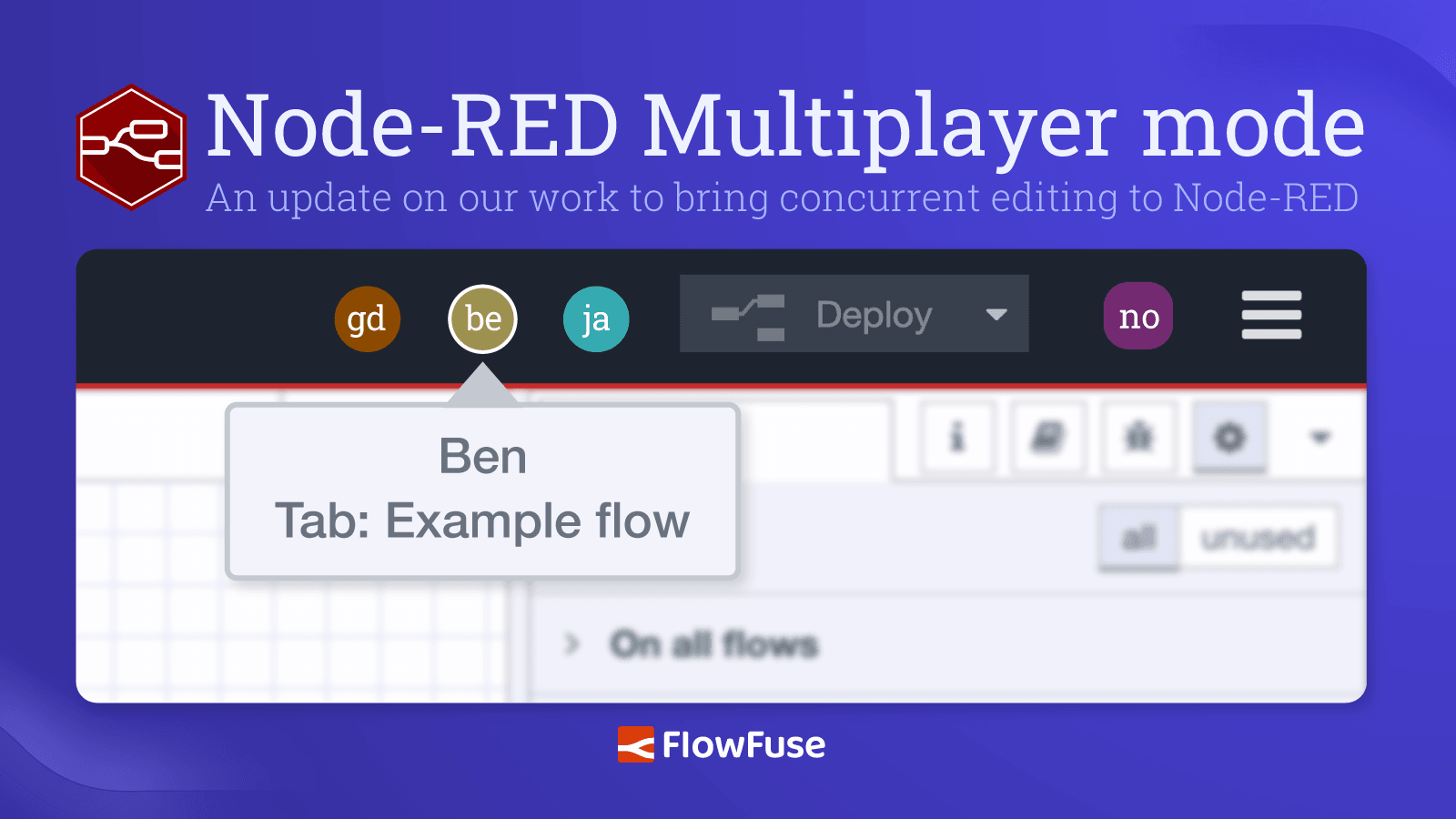
Node-RED Multiplayer mode
Last month I wrote about what users can expect with Node-RED 4.0. One of the features I highlighted was improving the concurrent editing experience. With the recent beta release of Node-RED, the first steps on that journey are now available to try.
In this post, I'll cover what has been done so far and what we've got planned.
-
Node-RED Manufacturing Architecture
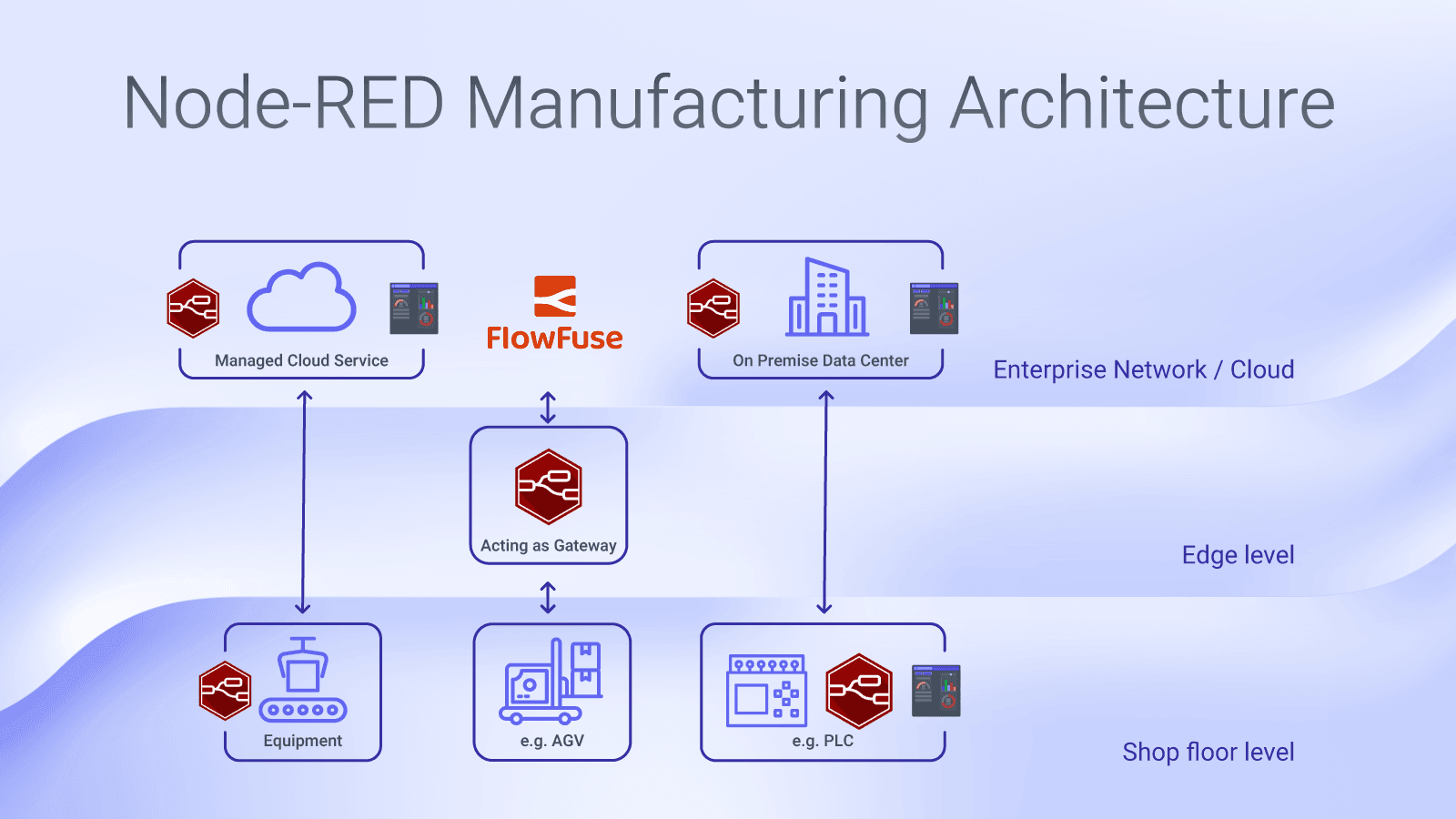
The architecture of a factory's Node-RED infrastructure is a common topic of discussion and inquiry. Fundamentally, my response to such queries unfolds in two parts. Initially, the focus must be on data organization. I champion a structure centered around a Unified Namespace, a concept I explore in depth in this article "Node-RED in a Unified Namespace Architecture." However, this is only one part of the inquiry. The other part of the question delves into the positioning of FlowFuse and Node-RED within the network infrastructure.
-
Using Kafka with Node-RED
Kafka is one of the most powerful technologies enabling seamless data communication. Many individuals are utilizing it alongside Node-RED for real-time data exchange in their IoT and IIoT applications. However, some users are encountering difficulties in obtaining assistance with Kafka-related queries.